The Best Fluffy Pancakes recipe you will fall in love with. Full of tips and tricks to help you make the best pancakes.

Wild boar meat recipes offer a delicious and unique way to experience game cooking at its finest. This lean, flavorful meat brings a rich, nutty taste to your table while providing an excellent alternative to conventional pork. Whether you’re a seasoned hunter or simply exploring new culinary territories, mastering wild boar preparation will expand your cooking repertoire significantly.
The key to successful wild boar dishes lies in proper preparation and cooking techniques that enhance its natural flavors while ensuring food safety. This comprehensive guide will walk you through everything you need to know about preparing this remarkable game meat.
Before diving into the recipes, it’s important to note that wild boar meat is leaner than domestic pork and requires specific cooking methods to achieve the best results. Let’s explore how to create mouth-watering dishes that will impress your family and guests.
Prep Time: 45 minutes
Cook Time: 2 hours 30 minutes
Total Time: 3 hours 15 minutes
Yield: 6-8 servings
Calories: 320 per serving
Contents
hide
Ingredients
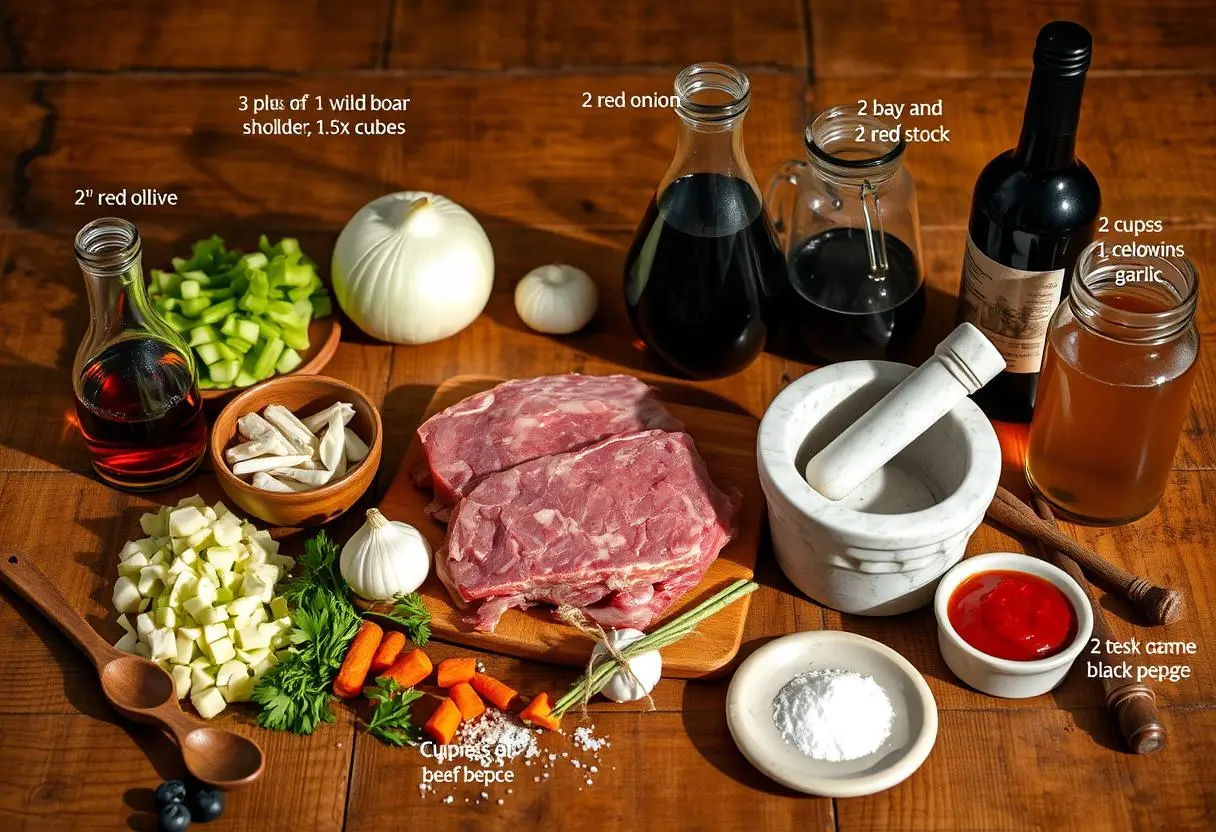
- 3 pounds wild boar shoulder or leg, cut into 1.5-inch cubes
- 2 tablespoons olive oil
- 1 large onion, diced
- 4 cloves garlic, minced
- 2 carrots, chopped
- 2 celery stalks, chopped
- 1 cup red wine
- 2 cups game or beef stock
- 2 bay leaves
- 1 tablespoon fresh thyme
- 2 tablespoons tomato paste
- Salt and black pepper to taste
When selecting wild boar meat, look for cuts with a deep red color and minimal fat. The meat should be firm to the touch and have a clean, fresh smell.
If wild boar shoulder isn’t available, you can substitute with leg or neck meat, as these cuts also work well for slow-cooking methods.
For best results, source your wild boar from a reputable game meat supplier or hunter who follows proper field dressing practices.
Consider marinating tougher cuts overnight in wine or buttermilk to help tenderize the meat.
Wild Boar Meat Recipes: Step-by-Step Instructions
Follow these detailed steps for perfectly tender and flavorful wild boar:
- Trim any excess silver skin or fat from the meat and cut into uniform pieces
- Pat the meat dry with Paper Towels and season generously with salt and pepper
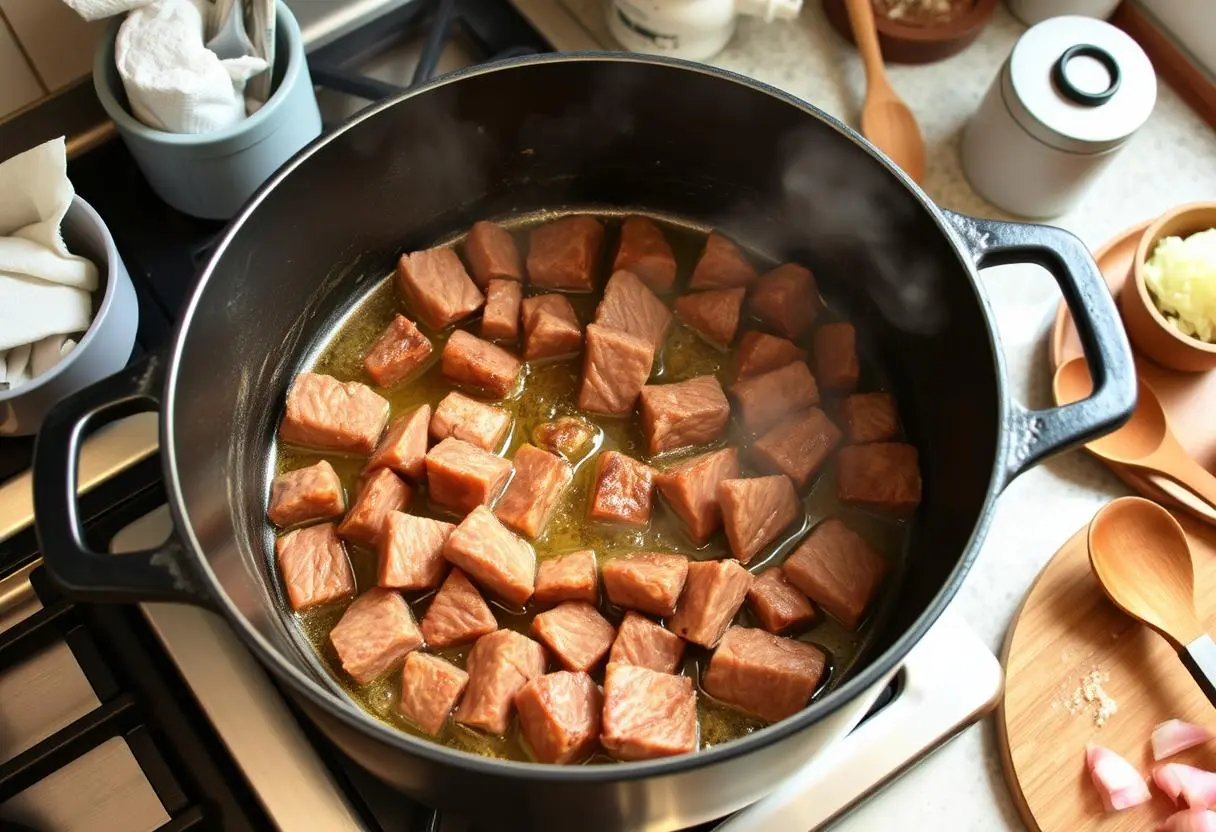
- Heat olive oil in a large Dutch Oven over medium-high heat
- Brown the meat in batches, ensuring not to overcrowd the pan
- Remove meat and sauté onions, garlic, carrots, and celery until softened
- Add tomato paste and cook for 2 minutes until darkened
- Deglaze with red wine, scraping up brown bits from the bottom
- Return meat to pot and add stock, herbs, and bay leaves
- Bring to a simmer, then reduce heat to low and cover
- Cook for 2-2.5 hours or until meat is fork-tender
The meat is done when it can be easily pierced with a fork but still holds its shape. If it’s still tough after the suggested cooking time, continue cooking in 30-minute intervals.
Watch for signs of doneness: the meat should reach an internal temperature of 145°F (63°C) minimum for food safety.
If the sauce becomes too thick during cooking, add more stock or water in small amounts to maintain desired consistency.
(You can find out more via wild boar meat recipes).
Tips for Perfect Results
- Always bring meat to room temperature before cooking
- Don’t skip the browning step – it develops crucial flavor
- Keep temperature low and steady during braising
- Allow meat to rest for 10-15 minutes before serving
- Cut against the grain for maximum tenderness
- Use a Meat Thermometer to ensure proper doneness
- Don’t rush the cooking process
- Taste and adjust seasoning near the end of cooking
- Reserve some cooking liquid for reheating leftovers
- Let the dish rest overnight for enhanced flavors
One common mistake is cooking wild boar at too high a temperature, which can make the Meat tough and dry. Low and slow is the key to success.
If you notice the meat becoming dry during cooking, try adding small amounts of stock or covering the pot more tightly to retain moisture.
Serving Suggestions
Wild boar pairs beautifully with robust fall and winter vegetables. Consider serving it over creamy polenta or mashed potatoes to soak up the rich sauce.
Root vegetables like parsnips, carrots, and turnips make excellent side dishes, especially when roasted with herbs and garlic.
A bold red wine, such as Syrah or Cabernet Sauvignon, complements the game flavors perfectly.
Fresh herbs like rosemary or sage sprinkled over the dish just before serving add a lovely aromatic finish.
Storage & Reheating
Store cooked wild boar in an airtight container in the refrigerator for up to 3 days.
For longer storage, freeze portions in freezer-safe containers for up to 3 months.
When reheating, add a splash of stock or water to prevent the meat from drying out.
Always reheat slowly over low heat to maintain the meat’s tenderness.
Variations
Traditional Wild Boar Stew
Add root vegetables and mushrooms during the last hour of cooking for a hearty, traditional game stew.
Enhance the sauce with juniper berries and fresh herbs for an authentic European touch.
Spicy Ground Wild Boar Chili
Transform ground wild boar into a rich, spicy chili with beans, peppers, and traditional Mexican spices.
Top with fresh cilantro, lime, and your favorite chili garnishes.
Wild Boar Meat Preparation with Asian Flavors
Incorporate ginger, garlic, soy sauce, and five-spice powder for an Asian-inspired dish.
Serve with steamed rice and stir-fried vegetables for a complete meal.
Slow-Cooked Wild Boar Ragù
Create a rich pasta sauce by slow-cooking the meat with tomatoes, herbs, and wine.
Serve over pappardelle or other wide pasta noodles.
FAQ
How do I know if wild boar meat is fresh?
Fresh wild boar meat should have a deep red color, firm texture, and no strong odors. Avoid meat that appears grey or has a strong gamey smell.
Can I cook wild boar rare like beef?
No, wild boar should always be cooked to a safe internal temperature of at least 145°F (63°C) to eliminate any potential food safety risks.
Why is my wild boar meat tough?
Tough meat usually results from cooking at too high a temperature or not cooking long enough. Use low, slow cooking methods for the best results.
Should I marinate wild boar before cooking?
While not required, marinating for 4-24 hours can help tenderize the meat and add flavor, especially for tougher cuts.
How does wild boar compare to domestic pork?
Wild boar is leaner, darker, and has a more intense, slightly nutty flavor compared to domestic pork. It requires different cooking techniques due to its lower fat content.
Can I freeze raw wild boar meat?
Yes, raw wild boar can be frozen for up to 6 months when properly wrapped and stored in airtight containers.
What are the best cuts of wild boar for cooking?
The shoulder, leg, and neck are excellent for slow-cooking methods, while the loin can be roasted or grilled if properly prepared.
Is wild boar meat healthy?
Yes, wild boar is a healthy choice as it’s lean, high in protein, and contains more nutrients than domestic pork due to the animal’s natural diet.
Kitchen Tools You’ll Need
- Dutch Oven
- Sharp Chef’s Knife
- Cutting Board
- Meat Thermometer
- Large Mixing Bowls
- Wooden Spoons
- Kitchen Twine
- Paper Towels
- Measuring Cups And Spoons
Extra Reward
🎁 Beyond The Tools: A Gift For You!
I hope you found the kitchen tools recommended above helpful! As a thank you for reading, I’ve unlocked a few exclusive Free Amazon rewards just for my followers.
Includes: Free Audiobooks • Kitchen Discounts • Welcome Boxes
More Recipes You May Like
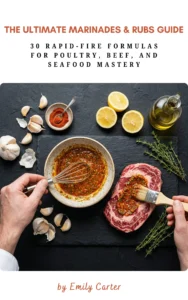
The Ultimate Marinades & Rubs Guide
To receive the book for free, please send the following information via email.
Newsletter Frequency